
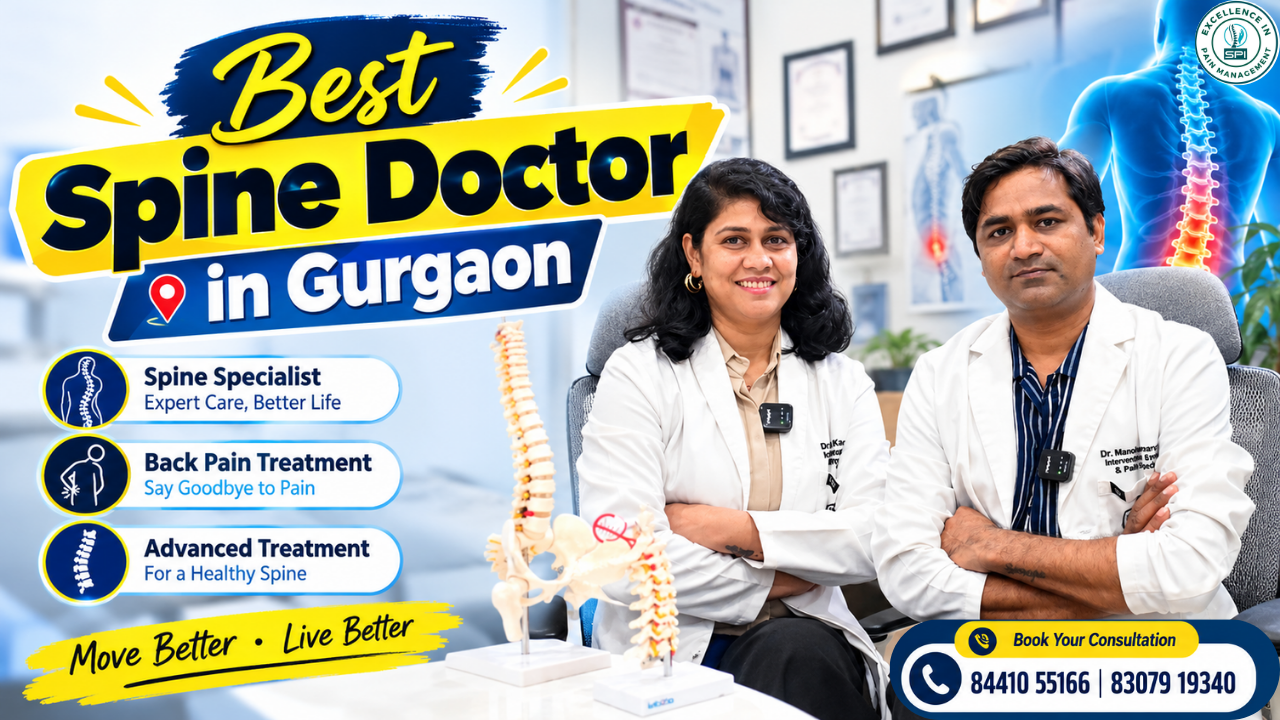
Best Spine Doctor in Gurgaon for back pain, slip disc, and sciatica treatment. Get expert spine care and advanced treatment at Spine & Pain Hospital.
Introduction
Back pain can make even simple daily activities difficult. Sitting at work, walking, bending, driving, or sleeping can become uncomfortable when your back hurts. For some people, the pain lasts only a few days. For others, it continues for weeks or keeps coming back.
Finding the Best Spine Doctor in Gurgaon can help you understand the actual cause of your pain and choose the right treatment. The right approach depends on your symptoms, medical history, physical examination, and any investigations required.
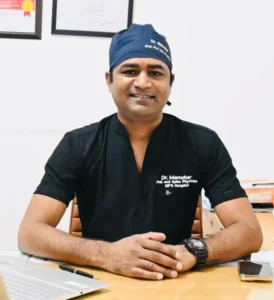
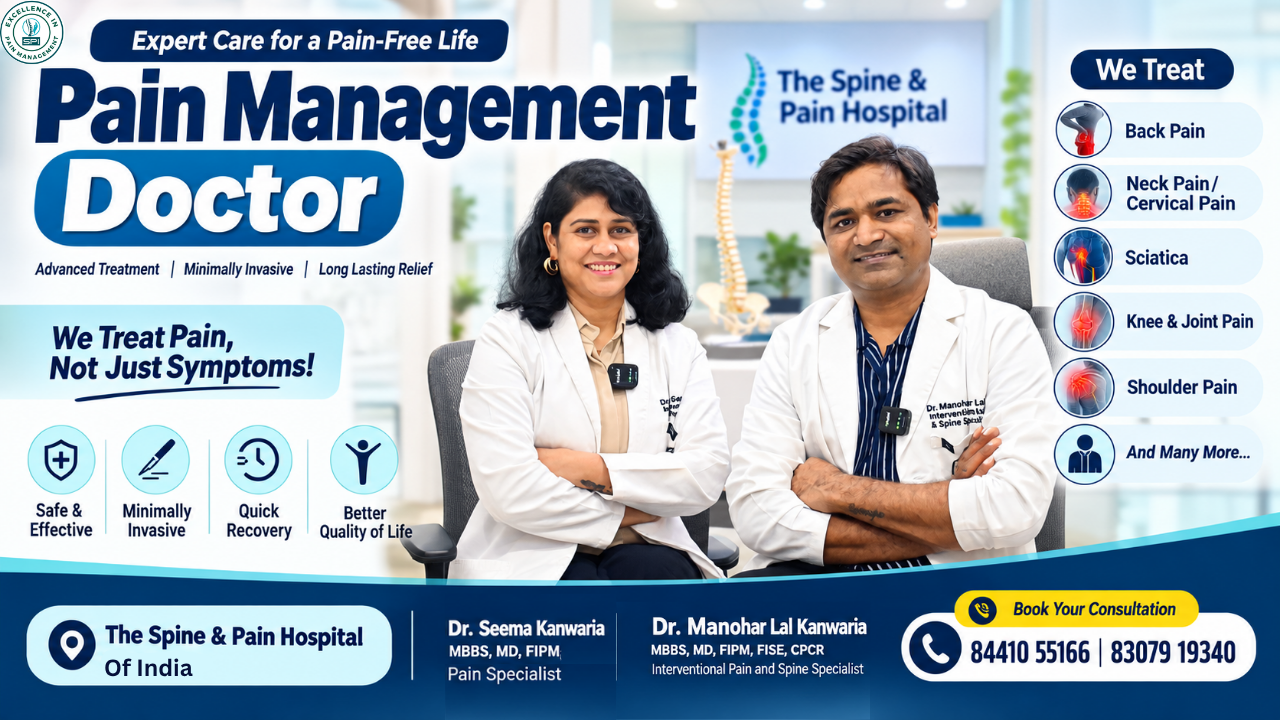
At The Spine & Pain Hospital in Gurugram, Dr. Manohar Lal Kanwaria, an Interventional Pain and Spine Specialist, evaluates patients with back pain and other spine-related problems. Treatment options depend on the patient’s condition and may include non-surgical care, pain management procedures, or minimally invasive treatments when appropriate.
In this guide, we will explain the common causes of back pain, when you should consult a spine specialist, available treatment options, and how to choose the right doctor for your needs.
What Does a Spine Doctor Do?
A spine doctor evaluates and treats conditions that affect the spine, including the bones, discs, joints, muscles, and nerves.
The spine supports your body and protects the spinal cord. When any of these structures become irritated, injured, or damaged, you may experience pain, stiffness, numbness, or difficulty moving.
A spine specialist identifies the possible source of your symptoms and recommends a suitable treatment plan{1}.
Depending on their qualifications and area of practice, spine specialists may treat conditions such as
- Lower back pain
- Neck pain and cervical spine problems
- Slip disc and disc bulge
- Sciatica and nerve compression
- Spinal stenosis
- Muscle-related back pain
- Chronic back pain
- Certain spine-related pain conditions
Not every patient needs surgery. Many back pain problems can improve with appropriate conservative treatment. However, the right treatment depends on the underlying cause and severity of the condition.
Common Causes of Back Pain
Back pain can develop for several reasons. Understanding the possible cause is an important step towards effective treatment.
1. Poor Sitting Posture
Sitting for long hours without movement can put extra stress on your back and neck. This is common among office workers, drivers, and people who spend much of their day using computers or mobile phones.
Poor posture may contribute to muscle discomfort and stiffness. Regular movement, suitable workstation adjustments, and appropriate exercises can help reduce the strain.
2. Slip Disc
The spinal discs act as cushions between the bones of your spine. Sometimes, disc material moves beyond its normal boundary and irritates a nearby nerve.
This condition is commonly called a slip disc or herniated disc.
Symptoms may include lower back pain, pain travelling into the leg, tingling, numbness, or weakness. Treatment depends on the location of the disc problem and the severity of the symptoms.
3. Disc Bulge
A disc bulge occurs when a spinal disc extends beyond its usual shape. It may develop with age or due to changes in the disc.
Some people have a disc bulge without experiencing any symptoms. In other cases, it may contribute to back pain or nerve irritation.
An MRI finding alone does not always mean that the disc bulge is responsible for your pain. Your doctor must consider your symptoms and examination findings.
4. Sciatica
Sciatica refers to pain associated with irritation or compression of the sciatic nerve or its nerve roots.
The pain may begin in the lower back or buttock and travel down one leg. Some people also experience tingling, numbness, or weakness.
Sciatica can have different causes, including a herniated disc. A proper evaluation helps determine which treatment may be suitable.
5. Muscle Strain
Lifting heavy objects incorrectly, sudden movements, excessive physical activity, or an unfamiliar workout can strain the muscles and soft tissues around the spine.
This may cause pain, stiffness, and difficulty bending or moving comfortably.
Many uncomplicated muscle strains improve with appropriate activity modification and conservative care.
6. Spinal Stenosis
Spinal stenosis is a narrowing of the spaces within the spine. This narrowing can put pressure on nerves.
Symptoms may include back pain, leg discomfort, tingling, or difficulty walking for long periods. Some people notice that their symptoms change when they sit or bend forward.
Treatment depends on the severity of the narrowing, the symptoms, and how much the condition affects daily activities{2}.
When Should You Consult a Spine Specialist?
Occasional back discomfort may improve with time and appropriate self-care. However, persistent or recurring pain should not be ignored.
Consider consulting a qualified specialist if
- Your back pain continues or keeps returning.
- Pain travels from your back into your buttock or leg.
- You experience tingling or numbness in your legs.
- Back pain interferes with sleep, walking, or daily activities.
- You have difficulty standing or sitting comfortably.
- Your symptoms are getting worse despite initial treatment.
- You experience unexplained pain along with other concerning symptoms.
Seek emergency medical care if you develop new difficulty controlling your bladder or bowel, numbness around the groin or saddle area, or sudden or rapidly worsening leg weakness. These symptoms can indicate a serious problem requiring urgent assessment.
Early evaluation can help identify the cause of symptoms and prevent delays in receiving appropriate treatment.
How to Choose the Best Spine Doctor in Gurgaon
Choosing a doctor is an important decision, especially when back pain affects your daily life.
Instead of relying only on advertisements or online rankings, consider the following factors when selecting a spine specialist.
1. Check Qualifications and Specialisation
Look for a doctor whose qualifications and clinical experience are relevant to your condition.
Spine-related pain can have several causes. A doctor with appropriate training in spine care or pain management can help assess your symptoms and explain the available options.
2. Understand the Diagnostic Approach
A good evaluation should consider your medical history, symptoms, physical examination, and previous treatments.
Imaging tests such as X-rays or MRI scans may be recommended when medically appropriate. However, not every patient needs an MRI or other imaging test.
Your diagnosis should be based on the complete clinical picture rather than a scan report alone.
3. Ask About Treatment Options
Different conditions require different treatments.
Ask your doctor about conservative care, medicines, physiotherapy, pain management procedures, and surgical options when relevant.
You should understand why a particular treatment is recommended, what benefits it may offer, its potential risks, and what alternatives are available.
4. Look for Individualised Care
Back pain does not affect everyone in the same way. Age, physical activity, occupation, medical history, and the underlying cause can influence treatment decisions.
A suitable treatment plan should be based on your individual needs rather than a one-size-fits-all approach.
5. Consider Follow-Up Care
Recovery may require monitoring, exercise guidance, lifestyle changes, or additional evaluation.
Choose a healthcare provider who explains the next steps and helps you understand what to expect during treatment and recovery{3}.
Meet Dr. Manohar Lal Kanwaria at The Spine & Pain Hospital
If you are looking for a spine specialist in Gurugram, you can consider consulting Dr. Manohar Lal Kanwaria at The Spine & Pain Hospital.
Dr. Manohar Lal Kanwaria is an Interventional Pain and Spine Specialist. His listed qualifications include MBBS, MD, FIPM, FISE, and CPCR.
The hospital evaluates patients experiencing back pain, neck pain, sciatica, disc-related problems, and other spine-related conditions.
The first step is to understand your symptoms and identify the likely source of the pain. Based on the findings, the doctor can discuss suitable treatment options.
These may include conservative treatment, interventional pain management, or selected minimally invasive procedures when clinically appropriate.
The aim is to help patients understand their condition and make informed decisions about their care.
Hospital details
- Hospital: The Spine & Pain Hospital
- Doctor: Dr. Manohar Lal Kanwaria
- Location: Sector 43, Sushant Lok, Gurugram, Haryana
- Website: www.spinepainhospital.com
- Contact: 84410 55166 | 83079 19340
Treatment Options for Back Pain
The best treatment depends on what is causing your pain. Some patients improve with simple measures, while others may need specialist care.
Here are some treatment options that may be considered after a medical evaluation.
1. Conservative Treatment
Conservative treatment is often the first approach for uncomplicated back pain when there are no warning signs that require urgent intervention.
It may include:
- Appropriate medicines prescribed by a doctor
- Physiotherapy
- Gradual return to normal activities
- Exercises suited to your condition
- Changes to posture and daily habits
- Advice on lifting, sitting, and movement
Complete bed rest is generally not recommended for most uncomplicated episodes of back pain. Gentle movement, as tolerated, may help recovery.
If your symptoms persist or worsen, your treatment plan may need to be reviewed.
2. Spine Endoscopy
Spine endoscopy is a minimally invasive technique used for selected spinal conditions.
The doctor uses a small camera and specialised instruments to access and treat the affected area through a small incision. It may be considered in certain cases of disc herniation or nerve compression.
Whether this procedure is appropriate depends on the diagnosis, the location of the problem, the severity of symptoms, and the patient’s overall health.
Although the incision is small, spine endoscopy is still a medical procedure with potential risks. Recovery time and outcomes vary between patients.
3. Lumbar Neuroplasty
Lumbar neuroplasty is a procedure that may be considered for selected patients with persistent lower back or leg pain associated with certain nerve-related conditions.
The purpose and expected benefit depend on the underlying problem and the specific technique used.
Your doctor should explain whether the procedure is suitable for you, what evidence supports its use in your condition, and what alternatives are available.
4. Ozone Nucleolysis
Ozone nucleolysis is a procedure that involves introducing an ozone-oxygen mixture into a spinal disc in selected cases of disc-related pain.
It is not suitable for every disc bulge or slip disc. The potential benefits, limitations, risks, and available alternatives should be discussed with a qualified specialist before making a decision.
A careful clinical assessment is necessary to determine whether this treatment is appropriate.
5. Radiofrequency Ablation (RFA)
Radiofrequency ablation uses controlled heat to affect specific nerves that transmit pain signals.
It may help selected patients with certain types of chronic pain, including some cases of facet joint-related back pain.
RFA does not treat every cause of back pain, and the results can vary. A specialist may recommend diagnostic procedures before deciding whether it is appropriate.
6. Other Interventional Pain Management Options
Depending on the diagnosis, a doctor may consider other pain management procedures.
These treatments are intended for specific conditions and should not be used simply because back pain has continued for a long time.
Before undergoing any procedure, ask about its expected benefits, risks, duration of effect, recovery requirements, and alternatives{4}.
Can Back Pain Be Treated Without Open Surgery?
Yes, many cases of back pain can be managed without open surgery.
The appropriate approach depends on the cause of the pain and whether there is significant nerve compression or another condition requiring a specific intervention.
For example, some patients with uncomplicated back pain improve with medicines, physiotherapy, activity modification, and appropriate exercises.
Some patients with disc-related problems may also improve without surgery, depending on their symptoms and clinical findings.
When conservative treatment does not provide sufficient relief, a specialist may assess whether an interventional procedure or surgery is appropriate.
Minimally invasive procedures may be an option for selected patients, but they are not suitable for every condition.
It is important to remember that no single treatment works for every patient. The goal is to select a treatment that addresses the underlying problem while considering the patient’s safety, preferences, and expected benefits.
Tips to Prevent or Reduce Back Pain
Although not every cause of back pain can be prevented, healthy daily habits may help reduce unnecessary strain on your back.
Maintain a Comfortable Sitting Position
Keep your workstation comfortable and adjust your chair and screen to suit your needs. Avoid staying in the same position for too long.
Take Regular Movement Breaks
If you work at a desk, stand up and move around regularly. Short movement breaks can help reduce stiffness associated with prolonged sitting.
Stay Physically Active
Walking and suitable exercises can support general fitness. Strengthening and flexibility exercises may also help, provided they are appropriate for your condition.
If you have severe pain or a known spine problem, seek professional advice before starting a new exercise programme.
Lift Objects Carefully
Keep heavy objects close to your body and avoid sudden twisting while lifting. Ask for help with objects that are too heavy for you.
Maintain Healthy Habits
Adequate sleep, regular physical activity, and maintaining a healthy body weight can support general musculoskeletal health.
If back pain persists despite these measures, do not rely on home remedies alone. Consider getting a medical evaluation{5}.
Conclusion
Back pain can affect your comfort, mobility, work, and quality of life. Finding the cause of your symptoms is an important step towards choosing the right treatment.
If you are searching for the Best Spine Doctor in Gurgaon, consider a specialist who carefully evaluates your condition, explains your treatment options, and recommends care based on your individual needs.
At The Spine & Pain Hospital, Gurugram, Dr. Manohar Lal Kanwaria evaluates patients with back pain and other spine-related conditions. Depending on the diagnosis, treatment may involve conservative care, pain management procedures, or selected minimally invasive treatments.
Do not ignore persistent back pain or symptoms that are getting worse. A timely medical evaluation can help you understand your condition and decide on the next steps.
Book a consultation with The Spine & Pain Hospital
Address: The spine and apin Hospital of India
Sector 43, Sushant Lok, Gurugram, Haryana
Call: 84410 55166 | 83079 19340
Website: www.spinepainhospital.com
Medical disclaimer: This article is for general information only and is not a substitute for professional medical advice, diagnosis, or treatment. Consult a qualified healthcare professional for advice about your symptoms and treatment options.
Frequently Asked Questions (FAQs)
1. Who Is the Best Spine Doctor in Gurgaon for Back Pain?
The Best Spine Doctor in Gurgaon depends on your condition, symptoms, and treatment needs. Dr. Manohar Lal Kanwaria at The Spine & Pain Hospital, Gurugram, provides evaluation and treatment options for back pain and spine-related conditions.
2. How Can the Best Spine Doctor in Gurgaon Treat Back Pain?
The Best Spine Doctor in Gurgaon can identify the possible cause of back pain through a medical history, physical examination, and investigations when required. Treatment may include medicines, physiotherapy, pain management procedures, or other suitable options.
3. When Should I Visit the Best Spine Doctor in Gurgaon?
You should consult the Best Spine Doctor in Gurgaon if your back pain persists, keeps returning, travels down your leg, or affects your daily activities. Seek emergency care for new bladder or bowel control problems, numbness around the groin, or rapidly worsening leg weakness.
4. Can the Best Spine Doctor in Gurgaon Treat Slip Disc Without Surgery?
The Best Spine Doctor in Gurgaon may recommend non-surgical treatment for selected slip disc cases. Treatment can include medicines, physiotherapy, and activity modification. The right approach depends on symptom severity, nerve involvement, and the patient’s overall condition.
5. Can the Best Spine Doctor in Gurgaon Help With Sciatica?
Yes, the Best Spine Doctor in Gurgaon can evaluate sciatica, identify its possible cause, and recommend appropriate treatment. Depending on the condition, treatment may include conservative care, pain management, or a procedure when medically indicated.
6. Does the Best Spine Doctor in Gurgaon Offer Spine Endoscopy?
The Best Spine Doctor in Gurgaon may consider spine endoscopy for selected spinal conditions. This minimally invasive procedure uses a small camera and specialised instruments. Its suitability depends on the diagnosis, symptoms, and medical evaluation.
7. How Do I Choose the Best Spine Doctor in Gurgaon?
To choose the Best Spine Doctor in Gurgaon, check the doctor’s qualifications, relevant experience, treatment approach, and ability to explain the benefits and risks of available options. Choose a specialist who recommends treatment according to your individual condition.
8. Can the Best Spine Doctor in Gurgaon Help Avoid Open Surgery?
The Best Spine Doctor in Gurgaon may recommend conservative treatment or minimally invasive procedures when appropriate. However, not every patient can avoid surgery. The decision depends on the underlying condition, symptom severity, and response to treatment.
9. Where Can I Consult the Best Spine Doctor in Gurgaon?
You can contact The Spine & Pain Hospital in Sector 43, Sushant Lok, Gurugram, to enquire about an appointment with Dr. Manohar Lal Kanwaria. Call 84410 55166 or 83079 19340 for appointment information.
10. What Treatments Can the Best Spine Doctor in Gurgaon Recommend for Chronic Back Pain?
The Best Spine Doctor in Gurgaon may recommend medicines, physiotherapy, lifestyle changes, or interventional pain management procedures, depending on the cause of chronic back pain. A proper evaluation helps determine the most suitable treatment.